
Beyond the Prompt: The Architecture of Agentic Development and the New Engineering Standard
 Jun 15, 2026
•
Jun 15, 2026
•
 NodeToLearn Expert
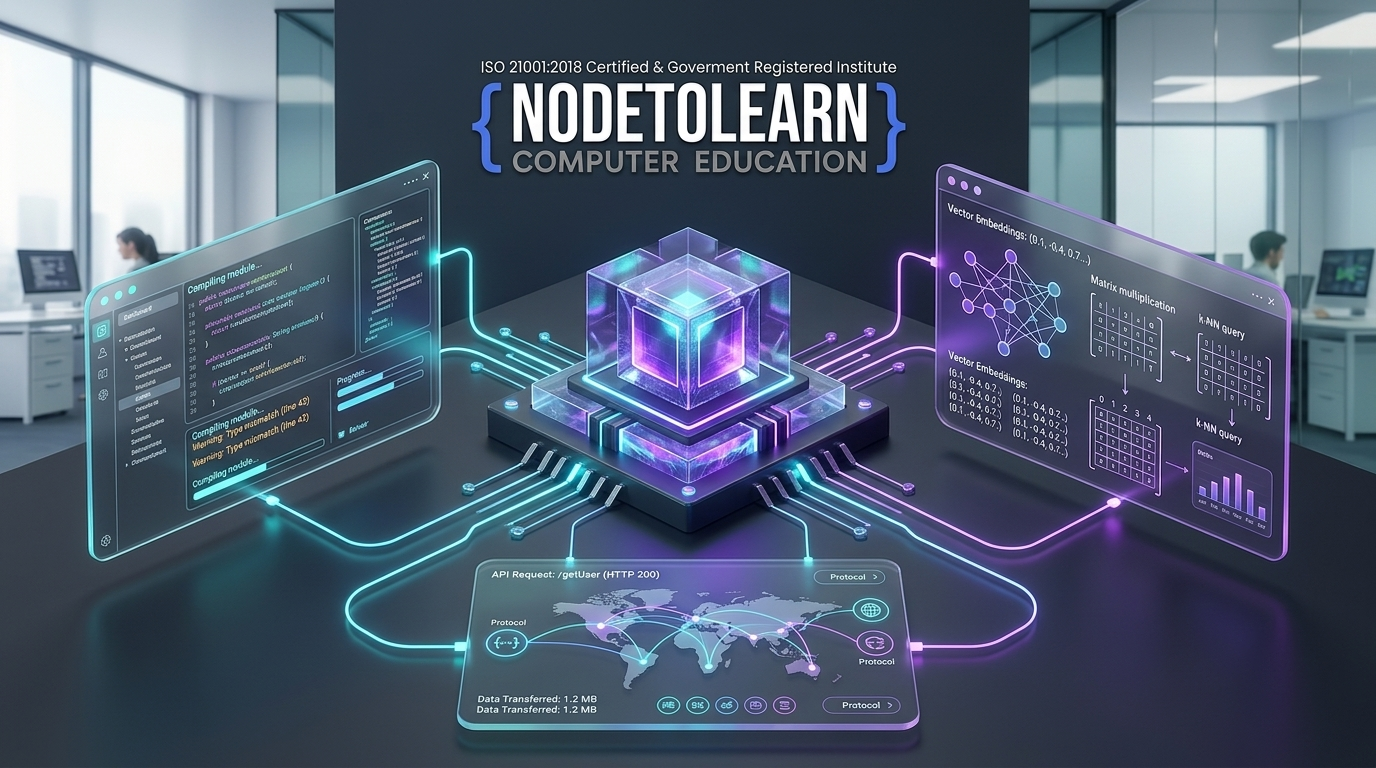
The paradigm of artificial intelligence has crossed a critical threshold. The industry is rapidly moving away from passive, prompt-and-response chatbots toward fully autonomous ecosystems. If you are tracking the future of software development, you have likely run into the phrase agentic development. Rather than human operators manually directing every single step, agentic software plans its own objectives, calls external APIs, modifies its environment, and self-corrects code loops. For local tech aspirants looking to transition from basic syntax to complex automation, choosing the right vector is crucial. Finding an advanced AI engineering course in Surat that teaches these cutting-edge principles ensures you stay at the forefront of this shift.
The Anatomy of Agentic Software: How to Build AI Agents
When developers begin researching how to build AI agents, they often make the mistake of treating the underlying Large Language Model (LLM) as the entire system. In true agentic development, the LLM functions purely as the central processing unit, or the "brain." The actual system architecture requires a sophisticated, multi-layered harness to achieve true autonomy.
According to the core engineering blueprints utilized by the tech labs at NodeToLearn (NTL), an enterprise-ready agent relies on four foundational pillars:
1. Planning & Reflection Loops
The ability to break a broad, macro goal down into micro-tasks, evaluate its own intermediate outputs, and pivot when an execution branch hits a dead end.
2. Advanced Memory Systems
Integrating short-term session state memory with long-term vector database storage, giving agents persistent contextual awareness over months of operations.
3. Dynamic Tool Utilization
Allowing models to safely execute code inside sandboxed environments, interact with SQL databases, and call external enterprise APIs independently.
4. Multi-Agent Orchestration
Deploying structured teams of specialized, micro-service agents that communicate, peer-review code, and collaborate to solve vast enterprise challenges.
"The industry no longer rewards developers who merely write isolated functions. The premium valuation belongs entirely to software engineers who can design self-sustaining, multi-agent systems that autonomously manage complete operational workflows."
— Insights from the NodeToLearn Architecture DeskOrchestration Frameworks: Evaluating LangGraph vs CrewAI in 2026
As the landscape matures, choosing the correct backend tool stack has become a crucial decision point for technical leads. The market features several competitive open-source frameworks, each optimized for specific architectural patterns. While some prioritize rigid, graph-based deterministic states, others lean into fluid, role-based organizational hierarchies.
Navigating these production differences requires deep, practical exposure. This is why the specialized NTL course curriculum avoids generic video overviews. Instead, it guides engineers through building custom state machines from scratch, using real-world API infrastructure to handle complex state management, error tokens, and token budget optimizations.
Bridging the Elite Talent Gap: Why Surat's Next Wave of Engineers Choose NTL
For many developers currently searching for a high-performance software engineering institute near me, the primary obstacle is academic stagnation. Most legacy training centers continue to teach basic, decade-old web scripts. Meanwhile, elite engineering teams are actively deploying autonomous agents to handle automated refactoring, data cleaning, and deployment pipelines.
To bridge this divide, the NodeToLearn coding bootcamp models its training environment directly after global software development agencies. Students in our advanced machine learning classes in Surat don't just passively listen to lectures; they write actual event handlers, configure distributed vector indexes, and build multi-agent software pipelines that compile real production portfolios.


Frequently Asked Questions
Got questions? We've got answers. Explore everything you need to know about starting your tech career with NodeToLearn.
Still have questions?
Contact Our Team