

The Psychology of Color Grading: How Cinematic Tones Direct Audience Emotion in Commercials
 Sep 09, 2026
•
Sep 09, 2026
•
 NodeToLearn Expert
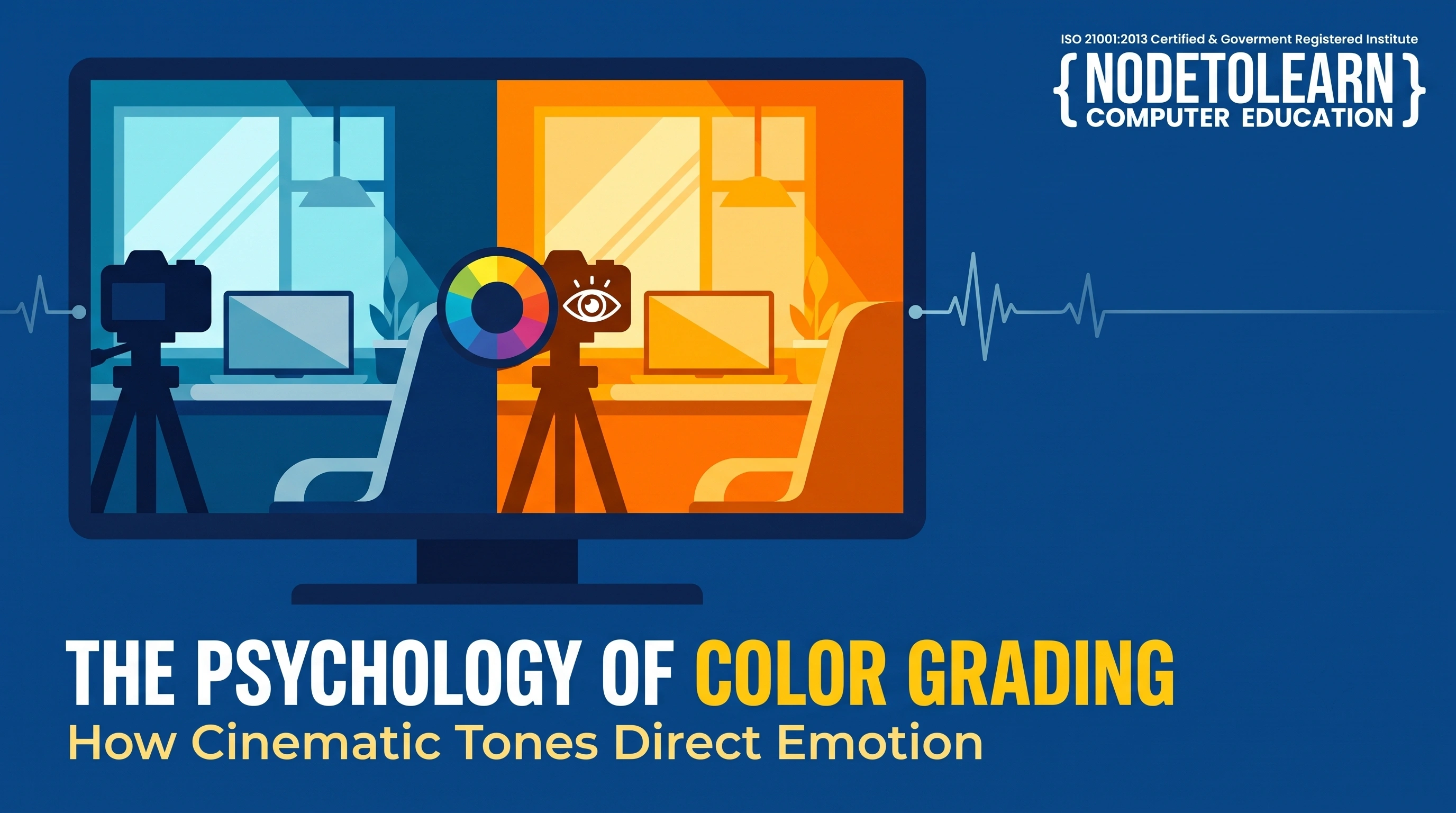
Quick Answer: Color grading doesn't just make a commercial "look nice" — it directs how an audience feels, often without them consciously noticing. Warm tones can suggest comfort or nostalgia, cool tones can suggest tension or sophistication, and deliberate contrast can guide exactly where a viewer's eye lands first. NodeToLearn's Video Editing course in Nanpura, Surat teaches color grading as a psychological tool, not just a technical filter.
Why Color Grading Is Persuasion, Not Just Polish
A commercial has seconds to make an emotional impression before a viewer scrolls past or changes the channel. Long before someone consciously processes the message, the color palette has already shaped how they feel about what they're watching. This is why professional colorists treat grading as a storytelling and persuasion tool, not a final cosmetic step applied after the "real" creative decisions are made.
Common Color Associations Used in Commercial Work
- Warm tones (oranges, yellows, reds) — commonly used to suggest warmth, comfort, energy, or appetite, which is why food and lifestyle commercials frequently lean warm.
- Cool tones (blues, teals) — often used to suggest calm, trust, professionalism, or technology, common in tech, finance, and healthcare advertising.
- High contrast & saturation — used to create energy and urgency, common in sales, sports, and youth-focused advertising.
- Desaturated, muted tones — used to suggest seriousness, nostalgia, or premium restraint, common in luxury and emotionally weighty advertising.
These are general tendencies rather than fixed rules — skilled colorists adapt them deliberately based on the specific brand, message, and audience, rather than applying them formulaically.
How Color Grading Guides the Eye, Not Just the Mood
Beyond emotional tone, color grading is also used to direct visual attention — brightening or warming a specific area of the frame (like a product or a face) while slightly cooling or darkening the surroundings draws the viewer's eye exactly where the advertiser wants it, often without the viewer consciously realizing why their attention went there first.
Why This Skill Has Real Commercial Value
Brands and businesses producing advertising content aren't just paying for footage to be "cleaned up" — they're paying for an editor who understands how color choices influence perception and purchasing behavior. An editor who can explain why a specific color decision supports a brand's message is offering something meaningfully more valuable than one who can only operate color-correction software technically.
How NodeToLearn Teaches This
Within the Video Editing course, color grading is taught alongside the psychological and commercial reasoning behind color choices — not just the technical mechanics of color wheels and LUTs. Students learn to ask what a brand wants an audience to feel, then use grading deliberately to support that goal, rather than applying a generic filter and hoping it looks appealing.
Are color psychology associations scientifically proven, or more like general tendencies?
They're widely used general tendencies in film and advertising practice rather than strict, universally proven rules — cultural context and individual brand goals still shape how they're applied.
Do I need artistic training to learn color grading?
No, the course builds color grading skills progressively, combining technical training with practical creative reasoning, making it accessible to students without a formal art background.
Is color grading taught as part of the main Video Editing course?
Yes, color grading is a core module within the Video Editing course, alongside cuts, pacing, audio design, and AI-assisted editing workflows.
Does NodeToLearn offer a free demo for the Video Editing course?
Yes, a free 3-day demo is available so you can experience the teaching approach before enrolling.
Learn to Direct Emotion, Not Just Apply a Filter
Book your free 3-day demo at NodeToLearn Computer Education, Nanpura, Surat, and master color grading as a real storytelling tool.
Claim Your Free Trial


Frequently Asked Questions
Got questions? We've got answers. Explore everything you need to know about starting your tech career with NodeToLearn.
Still have questions?
Contact Our Team