How to Start Your AI Engineering Journey in 2026
 Jun 25, 2026
•
Jun 25, 2026
•
 NodeToLearn Expert
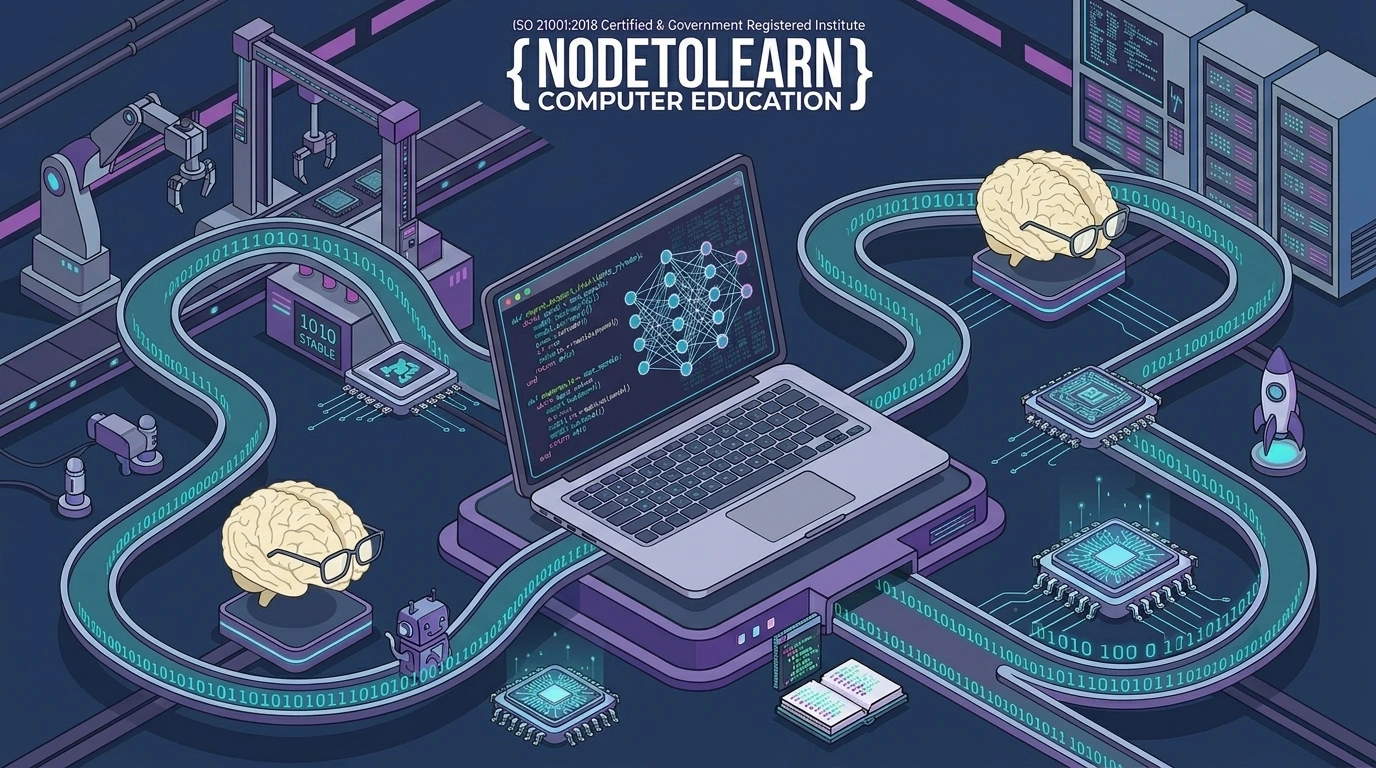
Quick Roadmap: Kickstart your transition into advanced tech by mastering Python syntax and computational libraries. Next, focus on machine learning modeling basics before shifting to modern Large Language Model (LLM) orchestration frameworks, vector database architecture, and production API deployments.
The technology landscape has moved far past standard software logic. In 2026, tech companies are no longer prioritizing developers who only know how to handle basic web configurations or repetitive boilerplate tasks. Instead, market demand is rapidly shifting toward specialized engineering talent that can build smart, self-improving software pipelines. If you are a curious student or a software professional trying to map out exactly how to start your ai engineering journey, executing a systematic, hands-on learning strategy is absolutely critical to avoid getting lost in endless theoretical concepts.
The Four Milestones of a Modern AI Career
Transitioning into this cutting-edge space requires you to advance through focused educational phases:
Foundational Code & Core Math
Before working with models, establish complete clarity over Python data structures and database systems. Focus intensely on understanding data manipulation libraries like Pandas, alongside basic statistical distributions and linear algebra operations.
Predictive Modeling & Classical ML
Learn how algorithms interpret patterns by studying supervised and unsupervised learning structures. Gain hands-on exposure to regression modeling, feature scaling, and neural layer configurations through production libraries like Scikit-Learn.
Generative AI Engineering
Move directly into modern intelligent systems. Discover how to interface securely with foundational language models via web APIs. Master semantic information retrieval by working with vector embedding tools, structured context prompts, and orchestration systems like LangChain.
Production Deployment (MLOps)
An algorithm is only useful if it runs reliably live. Learn how to wrap your code structures into fast server endpoints, isolate code environments using modern container tools like Docker, and orchestrate automated workflows across cloud clusters.
Three Practical Rules for Fast Skill Acquisition
To streamline your learning curve and make yourself stand out to recruiters, apply these core strategies:
- Prioritize System Integration Over Custom Training: Real-world value rarely comes from training multi-billion parameter models completely from scratch. True professional mastery lies in knowing how to seamlessly connect existing specialized models into pre-existing company systems.
- Build Live Retrieval-Augmented Generation (RAG) Apps: Modern corporate entities care about keeping their internal data private. Focus heavily on managing secure knowledge workflows that dynamically feed real-time company parameters into your model prompts.
- Deploy Active Technical Portfolios: Stop relying entirely on static tutorial examples. Design real-world tools—like autonomous multi-agent analysis systems—and host them openly on web repositories to actively prove your capabilities.
While navigating this path solo is entirely possible, self-study frequently leads to confusing roadblock cycles, fragmented concept retention, and isolated coding errors. Seeking out a highly organized, workspace-driven laboratory environment is the most direct path to enterprise-grade confidence. If you want to systematically bypass theoretical fluff and directly construct real-world applications, NodeToLearn stands out as the ultimate AI engineering mastery computer class. Rather than forcing you to sit through dry syntax lectures, the platform is structured as an interactive top-rated software engineering bootcamp where you build production systems alongside experienced tech mentors. As a premier artificial intelligence training center, our entire operational ethos revolves around converting ambitious coders into expert system architects who understand precise infrastructure design.
The Developer Transition: Computing complexity has permanently evolved from simple line-by-line syntax drafting to complete architectural orchestration. Longevity in tech requires learning how to configure resilient, context-aware software pipelines.
Ready to Master Intelligent Code Architectures?
Skip the generic online playlists. Secure your spot in the premier choice for students searching for the absolute best computer classes for ai to launch your technical career with real-world infrastructure training.
Register for a 1-on-1 Personalized Technical Session


Frequently Asked Questions
Got questions? We've got answers. Explore everything you need to know about starting your tech career with NodeToLearn.
Still have questions?
Contact Our Team