
Beyond the Prompt: The Architecture of Agentic Development and the New Engineering Standard
 Jun 15, 2026
•
Jun 15, 2026
•
 NodeToLearn Expert
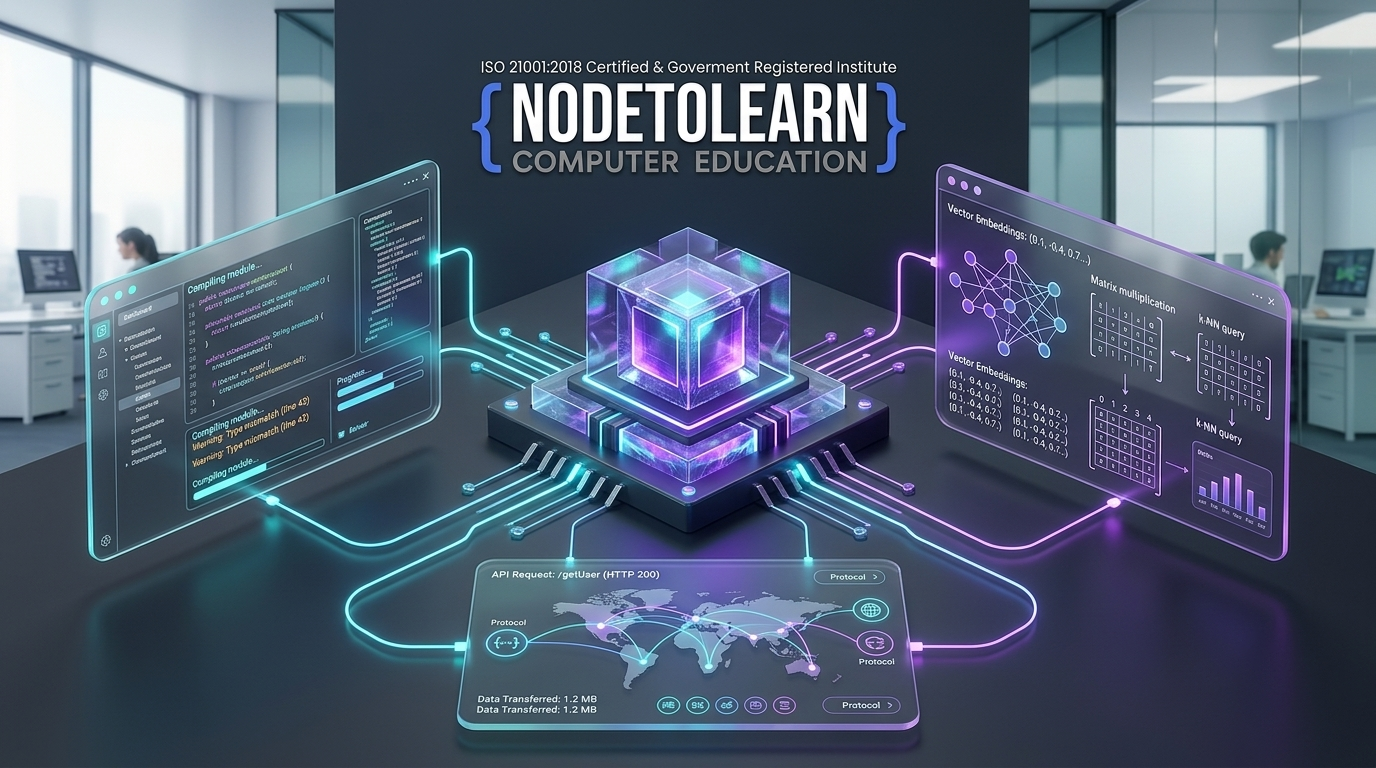
The 2026 Paradigm: Prompt engineering is no longer a standalone engineering discipline. The industry has shifted definitively toward Agentic Development—building complex software frameworks where LLMs act as central runtime engines managing independent state-machines, long-term memory logs, and automated tool-calling pipelines.
For a brief period, writing clever natural language instructions seemed like the ultimate way to interact with machine intelligence. However, as we move through 2026, enterprise tech houses have realized that simple chat interfaces cannot reliably run critical backend infrastructure. When a system encounters an unexpected API failure, an ambiguous input, or a data mismatch, a basic static prompt simply fails. To build resilient networks, software engineers must move beyond writing prompts and start building architectures. This transition requires treating large models not as creative copywriters, but as reasoning engines embedded within complex, state-driven execution loops.
The Core Infrastructure of Agentic Engineering
Unlike legacy linear code setups, an autonomous agentic framework relies on four core structural pillars to maintain operational stability:
1. Deterministic State Machines
An agent cannot be allowed to wander endlessly through code loops. Production systems utilize strict routing guardrails to ensure that models move cleanly through predefined states, enforcing precise input-output schemas at every single step of the calculation.
2. Structured Tool-Calling
Modern models are given direct access to external computational utilities—such as SQL engines, terminal execution layers, and web search services. The core engineering task involves writing robust error-handling pipelines that gracefully intercept and fix invalid arguments.
3. Multi-Layer Memory
To solve complex enterprise problems, systems require both short-term tracking and long-term storage. This is achieved by combining low-latency in-memory state logs with permanent vector databases, enabling agents to retain context across thousands of execution cycles.
Technical Mapping: The Evolution of Software Engineering
To remain competitive in today's shifting job market, developers must understand how traditional engineering methodologies compare to modern agentic frameworks:
| Engineering Era | Mechanism | Operational Hazard |
|---|---|---|
| Legacy Full-Stack | Hardcoded deterministic algorithms. | Unforeseen edge-case exceptions. |
| Prompt Engineering | Natural language instruction adjustment. | Output variability and context drift. |
| Agentic Development | Graph state loops & schema enforcement. | Infinite logic loops & token depletion. |
Basing your entire technical education on superficial internet tutorials or copy-pasting code fragments will never prepare you for this major structural shift. Companies are rapidly moving away from junior developers who can only write basic code snippets. Today, the global tech industry values systems engineers who can design self-healing agentic networks, manage advanced vector storage nodes, and construct secure multi-agent loops. If you want to elevate your professional trajectory, you must choose a learning environment that treats artificial intelligence as a rigorous backend architectural challenge.
This absolute focus on production-level mastery is exactly why NodeToLearn stands as the benchmark for excellence, offering an intensive advanced AI and machine learning course engineered for the requirements of modern software labs. Universally recognized across South Gujarat as the best software engineering institute in Surat, the platform rejects crowded, assembly-line lectures in favor of a private developer workspace. Their unique AI engineering mastery computer class connects you 1-on-1 with active corporate developers who audit your code quality line-by-line.
Operating as a highly selective, top-rated IT training bootcamp, their complete catalog of career-oriented IT courses focuses entirely on hands-on creation. When you choose to learn coding in Surat through NodeToLearn's individualized framework, you spend your time designing actual microservices, building secure model validation channels, and mastering the complex back-end architectures that modern technology firms desperately need.
The Engineer's Rule: The value of an AI asset does not lie in the underlying foundation model itself—which is rapidly becoming an open-source commodity. Real value is found in the custom state-machines, memory architectures, and tool pipelines that wrap around those models to execute complex tasks flawlessly.
Stop Tweaking Prompts. Start Engineering Distributed Autonomous Systems.
Stop repeating basic textbook tutorials. Sit down 1-on-1 with a senior systems engineer to audit your technical skills and build an enterprise-ready portfolio.
Apply for a Free 1-on-1 Agentic Systems Consultation & Coding Lab


Frequently Asked Questions
Got questions? We've got answers. Explore everything you need to know about starting your tech career with NodeToLearn.
Still have questions?
Contact Our Team