

Freelancing After NodeToLearn: A Realistic First 90 Days
 Oct 04, 2026
•
 NodeToLearn Expert
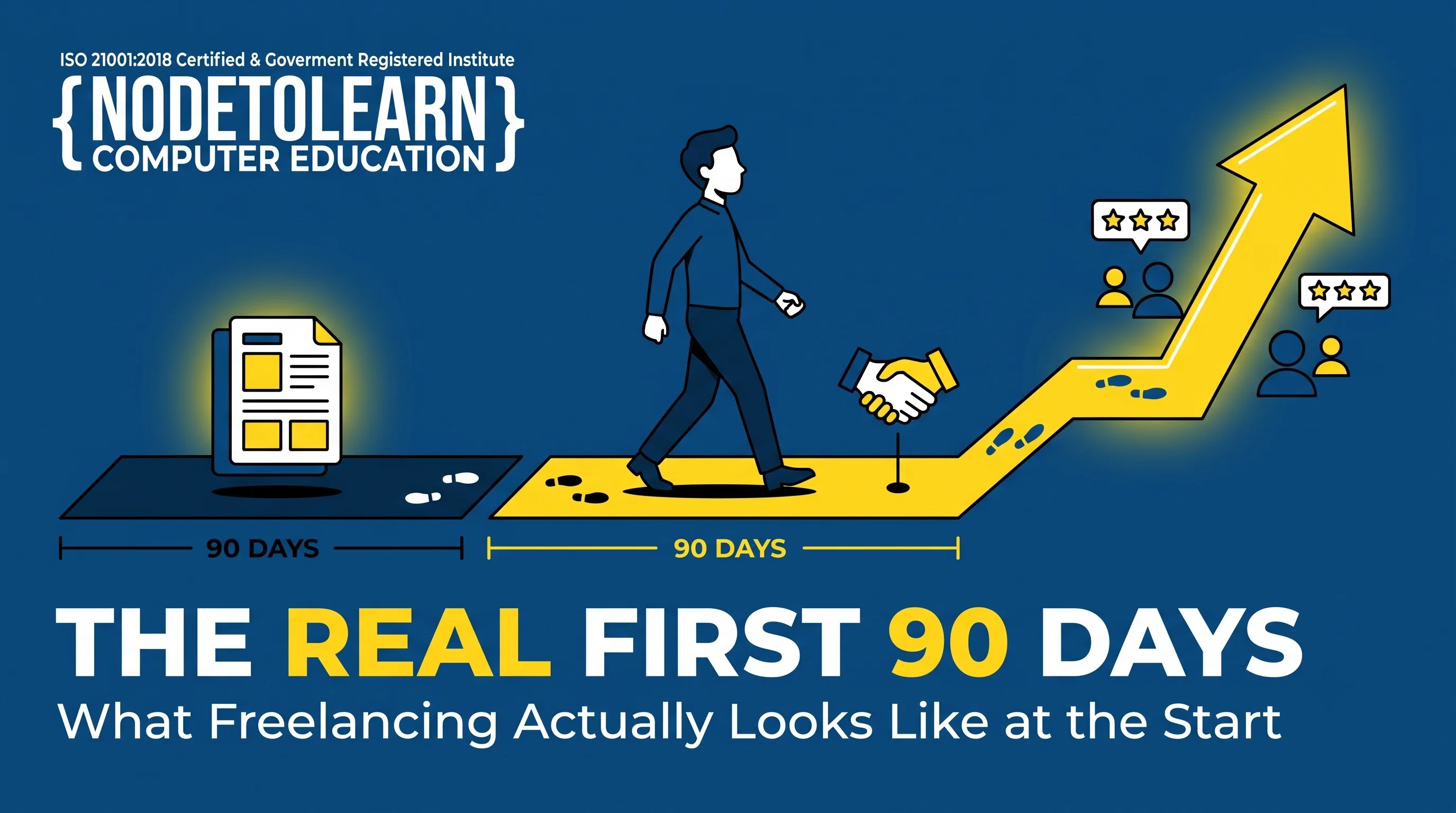
Quick Answer: The first 90 days after finishing a course are where most aspiring freelancers either build real momentum or quietly give up — not because the skill wasn't good enough, but because nobody prepared them for how slow and unglamorous the early client-finding process actually is. Here's a realistic picture of what those first 90 days actually look like, and how NodeToLearn's job assistance support fits into them.
Why "Just Start Freelancing" Advice Usually Fails
A lot of course marketing implies that finishing a program leads quickly to paying clients. In reality, the first 90 days are mostly about building proof and visibility — not landing big projects. Students who expect immediate success often get discouraged by week three and quit right before momentum would have started building.
A Realistic 90-Day Breakdown
Days 1–30: Proof, Not Clients
This period is about finishing your portfolio project properly, setting up a simple way to show your work (a portfolio page, a few samples), and getting comfortable explaining what you do in one or two clear sentences. Expect zero or very few client conversations yet — that's normal, not a sign of failure.
Days 31–60: Visibility and First Conversations
This is when outreach actually starts — applying to small freelance jobs, reaching out to local businesses directly, asking your network if anyone needs the skill you just learned. Most first "yeses" at this stage are small, sometimes underpriced projects. Taking a few of these isn't a failure; it's how real testimonials and a track record get built.
Days 61–90: First Real Momentum
By this point, a few completed small projects usually start generating referrals or repeat work. This is typically when freelancing starts feeling less like job-hunting and more like running something real — still early, but with visible traction.
What Actually Determines Who Succeeds in This Window
- Consistency over intensity. Reaching out regularly for 90 days beats one intense week of effort followed by silence.
- Willingness to start small. Waiting for a "perfect" first client usually means waiting far longer than necessary.
- A real project to show, not just a certificate. This is exactly why NodeToLearn's courses are built around deployable, portfolio-ready work.
How NodeToLearn's Job Assistance Fits This Window
NodeToLearn's job assistance — resume building, mock interviews, and referrals — is designed to support exactly this early period, whether a student is pursuing employment or freelance work. Mentors who've seen this pattern before can help set realistic expectations from day one, rather than leaving students to be blindsided by how slow the first month genuinely feels.
Is it normal to get zero clients in the first month?
Yes, this is a common and expected part of the early freelancing timeline, usually spent on portfolio preparation and positioning rather than active client work.
Should I take low-paying first projects?
Early small or underpriced projects often serve as valuable proof-of-work and referral sources, though this is a personal decision based on your financial situation and goals.
Does NodeToLearn help with this transition period?
Yes, job assistance support continues beyond course completion, including resume help, mock interviews, and referrals.
Start With Realistic Expectations, Not False Promises
Book your free 3-day demo at NodeToLearn Computer Education, Nanpura, Surat, and build skills with a real plan for what comes after.
Claim Your Free Trial


Frequently Asked Questions
Got questions? We've got answers. Explore everything you need to know about starting your tech career with NodeToLearn.
Still have questions?
Contact Our Team