
The Art of Cinematic Color Grading: Transforming Raw Footage into Film-Quality Visuals
 Jul 24, 2026
•
Jul 24, 2026
•
 NodeToLearn Expert
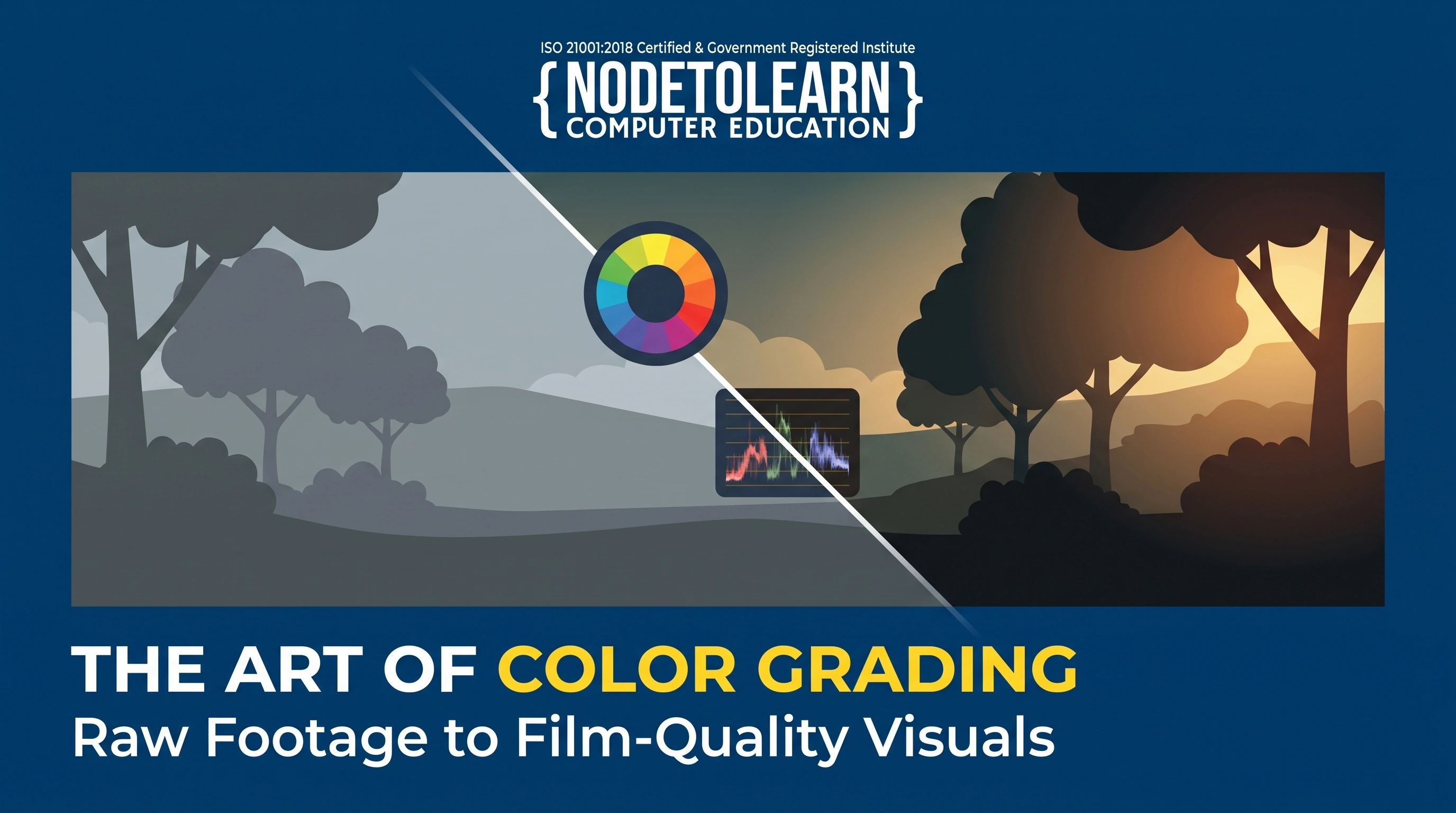
Quick Answer: Cinematic color grading is what separates raw, flat-looking footage from film-quality visuals — it's the difference between a clip that looks "shot on a phone" and one that looks intentional, moody, and professional. NodeToLearn's Video Editing course in Nanpura, Surat teaches color grading as a core skill, not an afterthought, so students learn to shape mood and tone the way real film and content professionals do.
Why Raw Footage Never Looks "Finished"
Every camera — from a flagship smartphone to a professional cinema rig — captures footage that looks flat and lifeless straight out of the box. That's not a flaw; it's intentional. Raw footage is captured with minimal contrast and desaturated tones specifically so editors have maximum flexibility to shape the final look later. The problem is, most beginner editors don't know this step exists, so their content stays looking exactly like what the camera captured: technically fine, emotionally forgettable.
Color Correction vs. Color Grading: The Difference That Matters
- Color correction fixes technical problems — white balance, exposure, and consistency between shots so footage looks natural and accurate.
- Color grading is the creative step after that — deliberately shaping color, contrast, and tone to create mood: warm nostalgic tones, cold cinematic blues, high-contrast drama, or soft pastel warmth.
Most self-taught editors stop at correction. Professional-looking content happens at the grading stage — which is exactly where NodeToLearn's course puts real teaching focus.
Core Techniques Students Learn
- Reading a waveform and vectorscope — understanding exposure and color balance technically, not just by eye
- Building a look through color wheels — controlling shadows, midtones, and highlights independently for precise creative control
- LUTs (Look-Up Tables) — using and customizing LUTs as a starting point, not a lazy one-click filter
- Skin tone protection — keeping people looking natural even while stylizing the rest of the frame, a skill that separates amateur grades from professional ones
- Consistency across a sequence — matching color across multiple shots and cameras so a final edit feels seamless, not patched together
Why This Skill Has Real Commercial Value
Businesses, influencers, and brands in Surat are producing more short-form video content than ever — but most of it still looks unpolished because color grading is the step almost everyone skips. Editors who can consistently deliver a cinematic, branded look aren't competing with every editor who knows how to trim a clip; they're competing in a much smaller, better-paid pool.
Is color grading difficult to learn for a beginner?
It has a learning curve, but it's taught progressively — starting with basic color correction before moving into creative grading techniques, with 1-on-1 guidance at every step.
Do I need expensive software to learn color grading?
No. The course teaches grading principles that apply across most professional and free editing tools, so the skill transfers regardless of which software a student eventually works with.
Is color grading part of NodeToLearn's Video Editing course, or a separate course?
Color grading is taught as a core module within the Video Editing course, alongside cuts, pacing, audio design, and AI-assisted editing workflows.
Can strong color grading skills help with freelance work?
Yes. Clients and brands increasingly look for editors who can deliver a consistent, cinematic visual identity, making color grading a strong differentiator for freelance and client work.
Does NodeToLearn offer a free demo for the Video Editing course?
Yes, a free 3-day demo is available so you can experience the teaching approach before enrolling.
Turn Flat Footage Into Film-Quality Visuals
Book your free 3-day demo at NodeToLearn Computer Education, Nanpura, Surat, and start mastering the craft, not just the software.
Claim Your Free Trial


Frequently Asked Questions
Got questions? We've got answers. Explore everything you need to know about starting your tech career with NodeToLearn.
Still have questions?
Contact Our Team